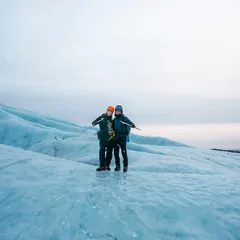
With aurora
Ice caves and northern lights: the two seasons are the same five months
These are sold together constantly, and for once the bundling is not a marketing trick: both need long, dark, cold nights, and both run from roughly November to March. What the listings do not explain is that one of the two can be promised and the other cannot, and that the best combination is not the one most people book.
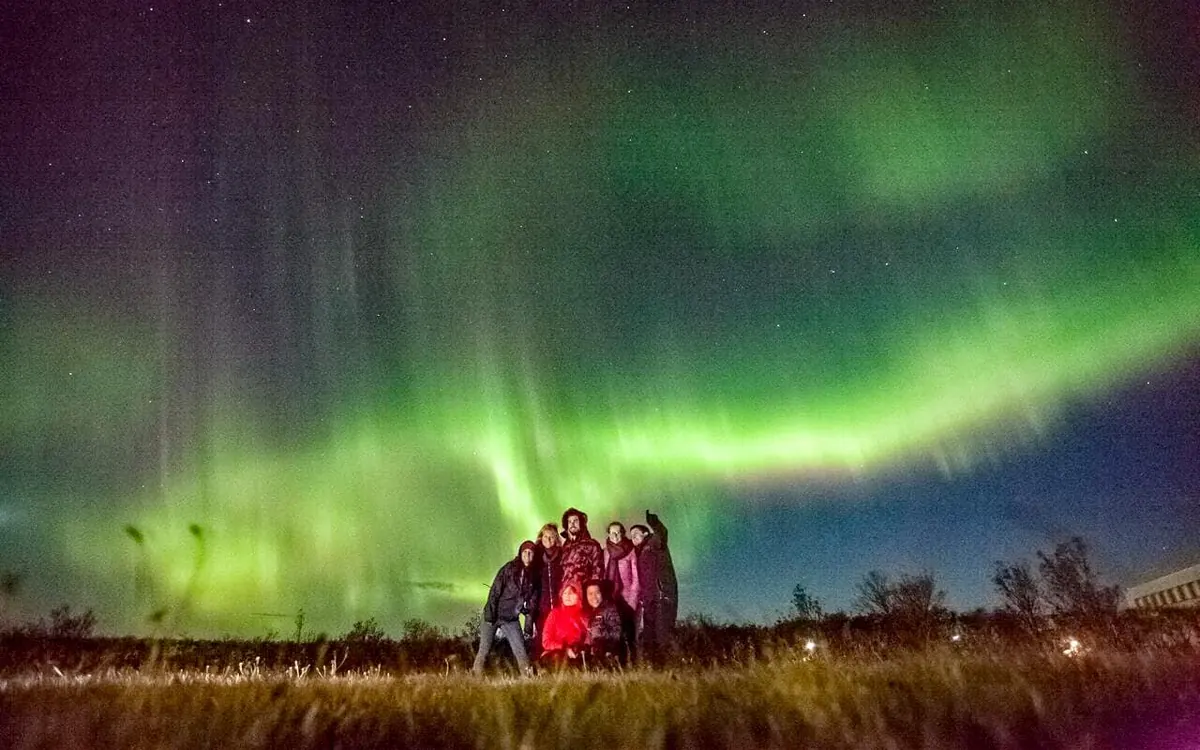
Quick answer
Ice cave season and aurora season overlap almost exactly: roughly November to March. The cave can be booked; the aurora cannot. Every honest operator says so. The practical answer is to book the cave during the day and give yourself several dark, cloudless nights in a row somewhere without streetlights — which is what the three-day south coast trip at $906 is actually selling.
The overlap, at a glance
- Ice cave season
- About Nov to Marwhen the ceilings are frozen hard
- Aurora season
- About Sep to Aprwhen nights are long and dark enough
- Overlap
- Five monthsNovember, December, January, February, March
- Can the cave be promised?
- Yessubject to weather and ice conditions
- Can the aurora be promised?
- Noand nobody credible claims otherwise
- What decides aurora odds
- Cloud, darkness, solar activityin that order of practical importance
- Best base
- The south-east coastalmost no light pollution anywhere near the lagoon
- Three days with both built in
- $906beds, meals and the driving included
- Darkest month
- Decemberabout five usable daylight hours
- Cancellation
- Freeon every tour on this site
Why they share a season
Both are made of the same thing: long, cold, dark nights
One is a booking. The other is weather. Do not plan them the same way.
The aurora is always there. Charged particles from the sun meet the upper atmosphere and make it glow, and they do it in summer exactly as much as in winter. The reason you cannot see it in June in Iceland is simply that it never gets dark. Aurora season is not a solar phenomenon; it is a darkness phenomenon.
Ice cave season has a different cause with the same shape. Caves can be entered when the meltwater has stopped and the glacier ceiling has frozen hard, which needs sustained cold — and sustained cold in Iceland comes with long nights.
So the two calendars land on top of each other almost perfectly. From November to March you can walk into a glacier in the afternoon and stand under a green sky the same evening. That is a genuinely extraordinary combination and it is the reason winter is the busy season on the south-east coast, despite everything about winter that argues otherwise.
The asymmetry is what matters for booking. The cave is a product: it has a start time and a guide and a refund policy. The aurora is weather. Treat them accordingly.
How to actually see the aurora
Three things, in order of how much they matter
Chase clear sky, not forecasts. And give yourself more than one night.
Cloud. This is the whole game, and nobody talks about it enough. A strong aurora behind cloud is invisible; a weak one under clear sky is not. The Icelandic Met Office publishes a cloud-cover forecast for exactly this purpose, and on any given night the useful question is not how active the aurora is but where the holes in the cloud are. People who chase clear sky see far more than people who chase forecasts.
Darkness. Get away from streetlights. The south-east coast is very good for this — there is essentially nothing between Höfn and Kirkjubæjarklaustur. Even the car park at the lagoon is dark enough. A hotel in Reykjavík is not.
Time. Not a night, but several. One clear night in a week is normal in an Icelandic winter, and if you have booked exactly one night on the south coast you have bought one roll of the dice. Three nights out of the city changes the odds completely, which is the honest argument for the multi-day trips over a single evening tour.
And one practical note: your eyes are worse at this than your phone. A faint aurora often looks like a pale grey cloud to the naked eye and comes out green on a three-second exposure. If someone says the sky looks odd, point a camera at it before you dismiss it.
Every trip, current fare
Every tour, with the ones that include dark evenings
Most of the tours on this site are daytime activities. The three-day trip is the one that builds the evenings in, and that is what you are paying for.
| Tour | Length | Price | Inside the ice? | Cost per hour | Rating |
|---|---|---|---|---|---|
| Skaftafell: Blue Ice Glacier Hike on VatnajökullThe blue ice of Vatnajökull on foot, most reviewed here | 4 h | $100 | No — on top | $25.00 | 4.7 · 1,501 |
| Skaftafell: Blue Ice Maze Glacier Hike on VatnajökullBetween crevasse walls rather than under a roof | 4 h | $133 | Crevasse, no roof | $33.25 | 4.4 · 275 |
| Iceland: Vatnajokull Glacier Hike and Ice Cave TourA walk on the glacier and a cave, cheapest inside | 4 h | $149 | Yes, natural | $37.25 | 4.6 · 21 |
| Jökulsárlón: Vatnajökull Glacier Ice Cave Tour by Super JeepStraight to the cave with the shortest walk | 3 h | $151 | Yes, natural | $50.33 | 3.4 · 6 |
| Skaftafell: Blue Ice Cave & Glacier Hike on VatnajökullA glacier walk and a cave under it, small group | 4 h | $152 | Yes, natural | $38.00 | 4.6 · 849 |
| Jökulsárlón: The Original Ice Cave Tour on VatnajökullThe longest-running cave tour from the lagoon | 3 h | $159 | Yes, natural | $53.00 | 4.6 · 1,131 |
| Jökulsárlón Ice Cave Tour - Inside Vatnajökull glacierThe shortest cave tour on this page | 2.5 h | $163 | Yes, natural | $65.20 | 4.7 · 65 |
| From Jökulsárlón: Crystal Blue Ice Cave Super Jeep TourThe crystal cave, reached by super jeep | 3 h | $164 | Yes, natural | $54.67 | 4.5 · 605 |
| Jökulsárlón: Breiðamerkurjökull Glacier Ice Cave TourThe glacier that calves into the lagoon | 3.5 h | $171 | Yes, natural | $48.86 | New |
| From Húsafell: Into the Glacier Ice Cave AdventureSix hundred metres cut into Langjökull, open all year | 4 h | $176 | Yes, cut | $44.00 | 4.7 · 857 |
| From Jokulsarlon: Crystal Blue Ice Cave Discovery TourA crystal cave tour with a low group cap | 3 h | $178 | Yes, natural | $59.33 | 5.0 · 1 |
| From Jökulsárlón: Vatnajökull Glacier Blue Ice Cave TourA small-group run to whichever cave is holding | 3 h | $184 | Yes, natural | $61.33 | 4.6 · 962 |
| From Jökulsárlón: Ice Cave and Glacier Exploration TourFive and a half hours, and more than one cave | 5.5 h | $259 | Yes, often two | $47.09 | 4.7 · 225 |
| From Reykjavik: Into the Glacier Ice Cave TourThe Langjökull tunnel with the coach from Reykjavík | 11 h | $305 | Yes, cut | $27.73 | 4.6 · 202 |
| Reykjavík: Langjökull Glacier Snowmobile Tour with Ice CaveA snowmobile across the ice cap, then the cave | 10 h | $340 | Yes, cut | $34.00 | 4.6 · 154 |
| From Reykjavik: 3-Day South Coast Winter Tour with Ice CaveThree days, with beds, meals and the aurora | 3 days | $906 | Yes, natural | $37.75 | 4.8 · 208 |
How to combine them
Five ways, from the cheapest to the one that actually works
In rough order of how likely you are to see both.
- Cave tour by day, chase the sky yourself by night
The cheapest option by a distance. Book any three-hour cave tour from the lagoon, sleep on the south coast, and drive ten minutes out of the village after dark. You need a car and a cloud forecast.
- Cave tour plus a separate evening aurora tour
Works, but be honest about what you are buying: a minibus driver who watches the same cloud forecast you can read. Most run a free re-ride if the night fails, which is the real value.
- Two or three nights on the south coast
The single biggest improvement in your odds, and it does not cost a tour ticket. Three nights near the lagoon in February will usually produce at least one clear one.
- The three-day trip at $906
Beds, meals, a natural ice cave, the lagoon and three evenings in dark places, with somebody else driving in winter. For a visitor without a car it solves the entire problem in one booking, and that is why it costs what it costs.
- Do not book a cave and an aurora tour on the same evening
Cave tours finish in the afternoon and the jeeps run late more often than not. An aurora pickup two hours later, five hours from the capital, is a plan with no slack in it.
December has about five usable hours of daylight. That is not a problem for cave tours — it is why they all leave at midday.
The season month by month→Common questions
Ice caves and northern lights, answered
Can you see the northern lights on an ice cave tour?
Not during the tour itself — cave tours run in daylight. But the seasons overlap exactly, so an afternoon in a cave and an evening under the aurora on the same day is entirely normal from November to March.
Is there a tour that includes both?
The three-day south coast trip at $906 includes a natural ice cave, the glacier lagoon and three evenings in places dark enough to see the aurora, with the driving and the beds included.
What is the best month for both?
February. The caves are fully open, the nights are still long, and there is enough daylight to drive comfortably. December has the longest nights but the least daylight for everything else.
Can anyone guarantee the northern lights?
No. Anyone who does is selling something. What a good operator offers instead is a free re-ride if the night fails, which is an honest response to weather.
Is the south coast good for aurora?
Very. There is almost no light pollution between Höfn and Kirkjubæjarklaustur, and the sky is large. The limiting factor is cloud, not darkness.
How many nights should I plan for?
Three or more outside the city. One clear night in a week is normal in an Icelandic winter, and a single night is a single roll of the dice.
Go deeper
More on walking into an Icelandic glacier
What an Iceland ice cave tour costs
Sixteen tours priced per person and per hour, from $100 to $906.
Blue iceThe blue ice cave in Iceland
Why the ice is blue, where the caves are, and what a tour actually shows you.
VerdictThe best Iceland ice cave tour
Sixteen tours ranked for one decision, with a straight answer at the end.
Crystal caveThe crystal ice cave
The cave behind most of the photographs, and why it is never the same one twice.
SkaftafellIce caves and blue ice at Skaftafell
The other meeting point, an hour closer to Reykjavik than the lagoon.
VatnajokullIce cave tours on Vatnajokull
Europe's largest ice cap, its outlet glaciers, and which caves sit in which.