Crystal cave
The crystal ice cave in Iceland: what it is and why it moves
Crystal cave is not a place. It is what guides call whichever cave has opened in the clearest, oldest ice that winter, and it is somewhere different almost every year. This page is what that name actually means, which tours go there, and why no operator will promise you a specific chamber.
Quick answer
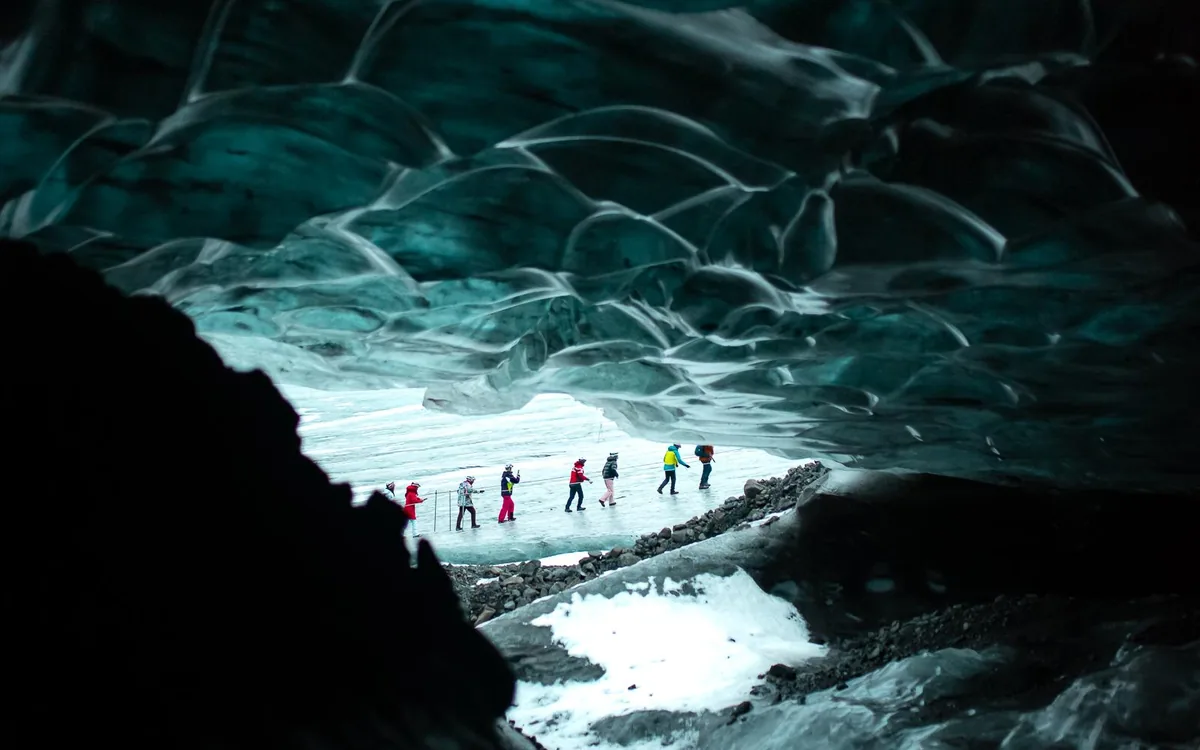
“Crystal cave” is a description, not an address. It means a cave in ice clear and old enough to glow deep blue, as opposed to the more ash-banded ice found nearer the surface or in other glaciers. The crystal caves are in Vatnajökull, reached from Jökulsárlón, they change location from year to year, and tours to them run about November to March from $159.
The crystal cave, at a glance
- What the name means
- Clear, old, deep-blue icenot a fixed location
- Which glacier
- Vatnajökullchiefly Breiðamerkurjökull
- Where you meet
- Jökulsárlón car parkeastern side, by the cafe
- Season
- About Nov to Marand the exact dates move every year
- Typical tour
- 3 hourstwenty to forty minutes of it under the ice
- From
- $159on the longest-running tour
- Small-group option
- $178capped numbers, newer listing
- Getting there
- Super jeep, then on foot15–25 minutes over moraine
- Same cave each year?
- Almost nevermeltwater takes a new line each spring
- Cancellation
- Freeon every tour on this site
Why it moves
A cave made by running water cannot stay still
Meltwater makes the cave, drains it, then destroys it. Every year.
Every winter, guides walk the glacier snouts looking for that season’s caves. They are not searching for a known entrance that got covered up. They are searching for passages that did not exist in June.
Here is the cycle. In summer, meltwater pours off the surface of the glacier, finds a crevasse, and disappears into it. Underneath, it carves a channel through the ice on its way out to the plain. The channel is full of water and completely inaccessible. Then the cold comes, the melt stops, the channel drains, and for a few months there is a dry passage inside the glacier with walls of ancient blue ice.
In spring the melt restarts. The same passage fills again, the ceiling thins, and at some point the whole thing either collapses or is enlarged beyond recognition. Meanwhile the glacier itself has moved — these are rivers of ice, and they flow. Next winter the water takes a different line and the guides go looking again.
That is why the listings are worded the way they are. An operator who names a specific chamber on a booking page is writing a cheque that the ice may not honour, and the good ones do not do it. What they sell is a guided trip to whatever is open and safe that week, and that is the right thing to buy.
Crystal, blue, diamond: what the names mean
Three words for the same thing, and one for something else
Crystal and blue mean the same. Diamond Beach is a beach. Katla is a different glacier.
Crystal cave and blue ice cave are used interchangeably by most operators. Both describe a cave in clear, old, dense ice inside Vatnajökull. If a listing uses either phrase and meets at Jökulsárlón, you are looking at the same kind of day.
Diamond Beach is not a cave. It is the black sand beach across the Ring Road from the lagoon, where icebergs that have floated out of Jökulsárlón are washed back up by the surf and sit on the sand until they melt. It is free, it is two minutes from the car park where the cave tours meet, and almost everybody goes there afterwards. It is worth knowing the name is not part of the cave tour.
Katla ice cave is a genuinely different product: a different glacier (Mýrdalsjökull), much closer to Reykjavík, open all year, and with darker, more heavily ash-banded ice. People who book it expecting the crystal-cave photograph are sometimes surprised.
Into the Glacier is the tunnel at Langjökull, cut by machines rather than water. It is not a crystal cave and it does not claim to be.
Two minutes from where the cave tours meet, icebergs wash back up onto a black sand beach. It costs nothing and almost everyone goes.
Jökulsárlón in full→On the day
Six things that decide how the crystal cave goes
None of these is in the listing, and all six change the experience.
- Go early or go late
Midday departures in the short winter days are the busiest. The first and last tours of the day meet fewer other groups at the entrance, and the low light outside is better anyway.
- The floor is sand, not ice
Meltwater carried volcanic sand through the passage and left it there. This is good news: it is why the floor is walkable rather than a rink. It is also why waterproof trousers matter more than a thick coat.
- Let your eyes adjust before judging the colour
Walking in from daylight, the first ten seconds look grey. The blue arrives once your eyes have adapted, and it keeps deepening the further in you go.
- Turn your phone flash off
A direct flash kills the colour completely and returns a white wall. Ambient light from the entrance, or the guide’s lamp bounced off a wall, gives you what you actually saw.
- Listen
Glacier ice creaks, ticks and occasionally cracks. It is not a warning sign and the guides are listening to it constantly. It is also the part nobody tells you about in advance and the part people remember.
- Do not plan a tight schedule after it
The jeeps run on the ice, not on a timetable. A three-hour tour that comes back twenty minutes late is completely normal.
Common questions
The crystal ice cave, answered
Where is the crystal ice cave in Iceland?
In Vatnajökull, on the south-east coast, reached from the Jökulsárlón glacier lagoon car park. The precise location changes every year because the caves themselves do.
Is the crystal cave the same as the blue ice cave?
Yes, in practice. Both names describe a cave in clear, old, deep-blue ice inside Vatnajökull. Operators use them interchangeably.
Is the crystal cave worth the money?
For a winter trip to the south-east coast, yes: it is the best blue on this site and the tours carry the largest review counts in the niche. What it is not is a long time underground — twenty to forty minutes of a three-hour tour.
How long does it take to walk through the crystal cave?
Most caves take a few minutes to walk through end to end. Groups spend twenty to forty minutes inside in total, which includes stopping, looking and photographing.
Can you go to the crystal cave without a tour?
No. It sits inside a moving glacier across an outwash plain closed to hire cars, and the ceiling is assessed by guides daily. Every tour on this site is guided and supplies a helmet.
Is Diamond Beach part of the crystal cave tour?
Usually not, but it is two minutes from the meeting point and free. Most people drive there straight after the tour.
Go deeper
More on walking into an Icelandic glacier
What an Iceland ice cave tour costs
Sixteen tours priced per person and per hour, from $100 to $906.
Blue iceThe blue ice cave in Iceland
Why the ice is blue, where the caves are, and what a tour actually shows you.
VerdictThe best Iceland ice cave tour
Sixteen tours ranked for one decision, with a straight answer at the end.
SkaftafellIce caves and blue ice at Skaftafell
The other meeting point, an hour closer to Reykjavik than the lagoon.
VatnajokullIce cave tours on Vatnajokull
Europe's largest ice cap, its outlet glaciers, and which caves sit in which.
KatlaThe Katla ice cave
A different glacier, a different kind of cave, and a season that runs all year.