Our top pick1,501 reviews
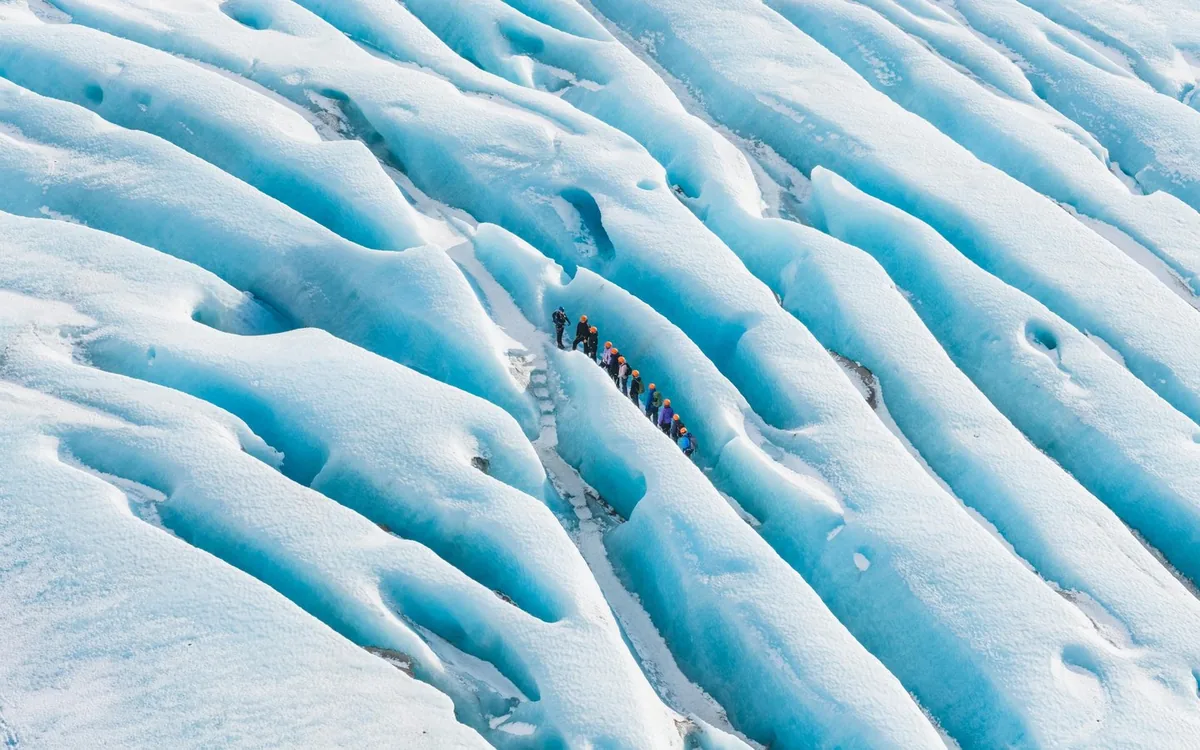
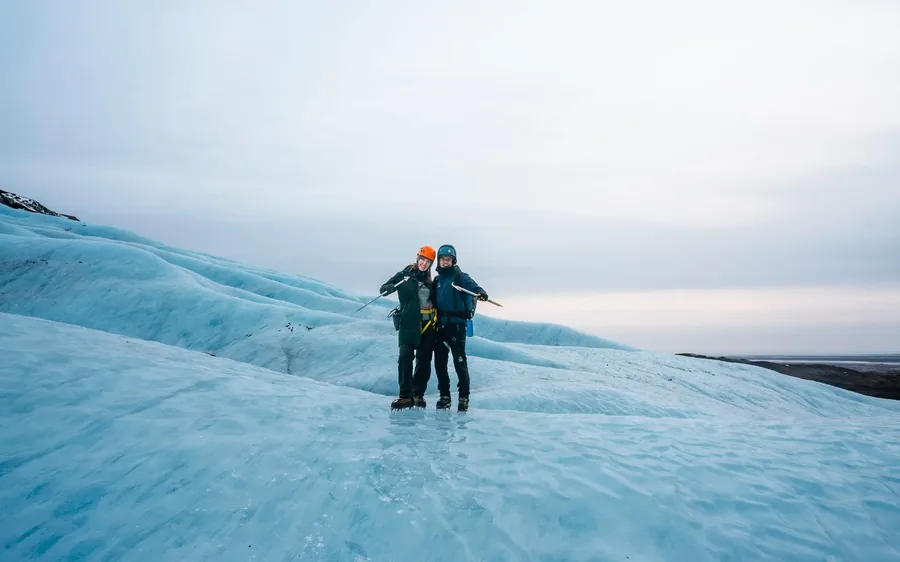
4 hSkaftafell: Blue Ice Glacier Hike on Vatnajökull
★ 4.7 · 1 501 reviews
- Four hours
- Guided tour
- Cheapest here
- Free cancellation
$100
Check availability→ 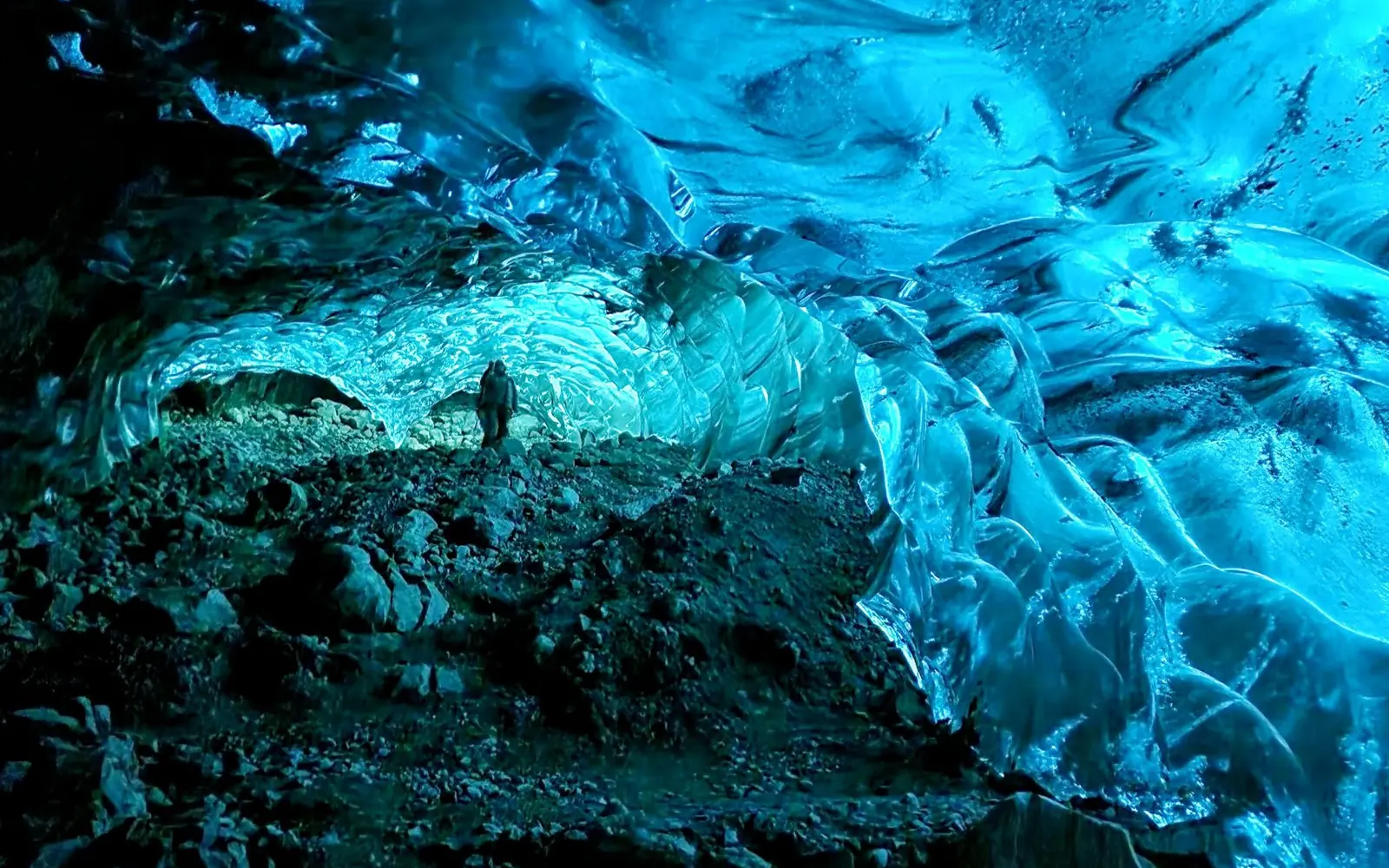
Book a blue ice cave Iceland trip and walk inside Vatnajökull's ancient ice. Compare 16 tours from $100 with free cancellation; the top tour holds 4.7 from 1,501 reviews. Natural crystal caves wait under the glacier, and 1 tunnel lets visitors cut through the ice.
Cheapest cave tour
16 tours compared$149
Today's lowest price across all 16 tours
Average rating
15 rated tours463
7,062 verified reviews across 15 tours
Your day
Shortest to longest25–11h
Shortest: Jökulsárlón Ice Cave Tour
Longest: Into the Glacier Ice Cave
Everything you can book here
Sixteen departures, with the two columns that actually decide it: where the tour starts, and whether the cave is one the glacier made or one a machine cut. Three hours from Jökulsárlón and eleven hours from Reykjavík are not the same day.
★ 4.7 · 1 501 reviews
★ 4.6 · 849 reviews
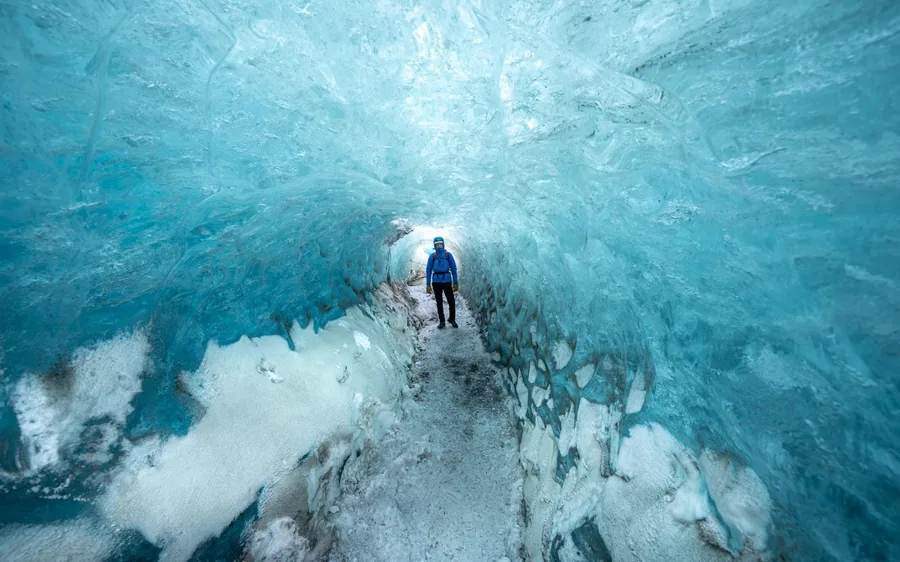
★ 4.6 · 1 131 reviews
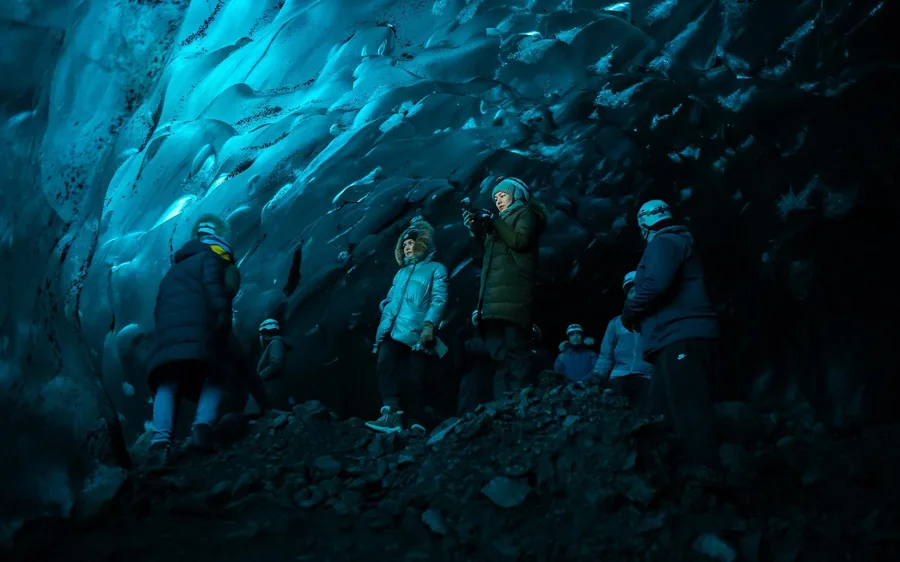
★ 4.6 · 962 reviews
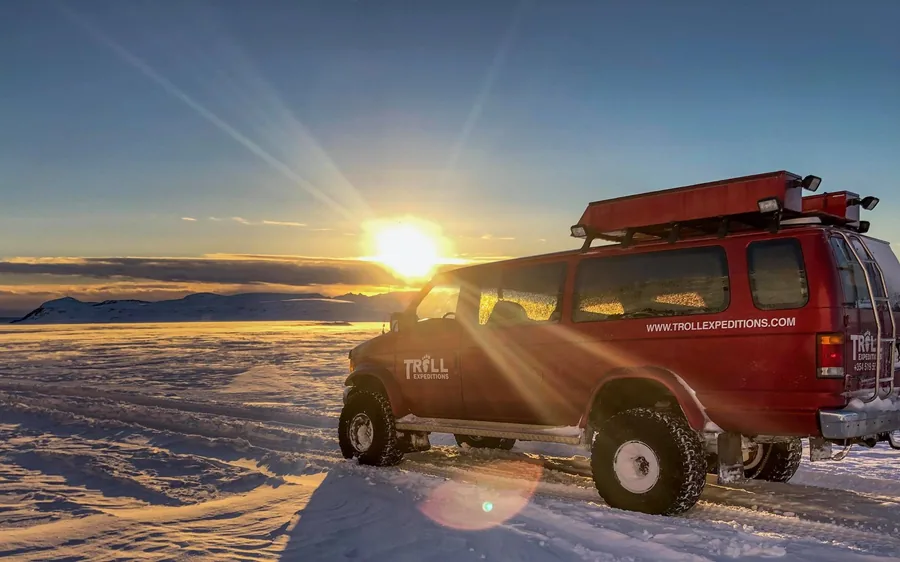
★ 4.5 · 605 reviews
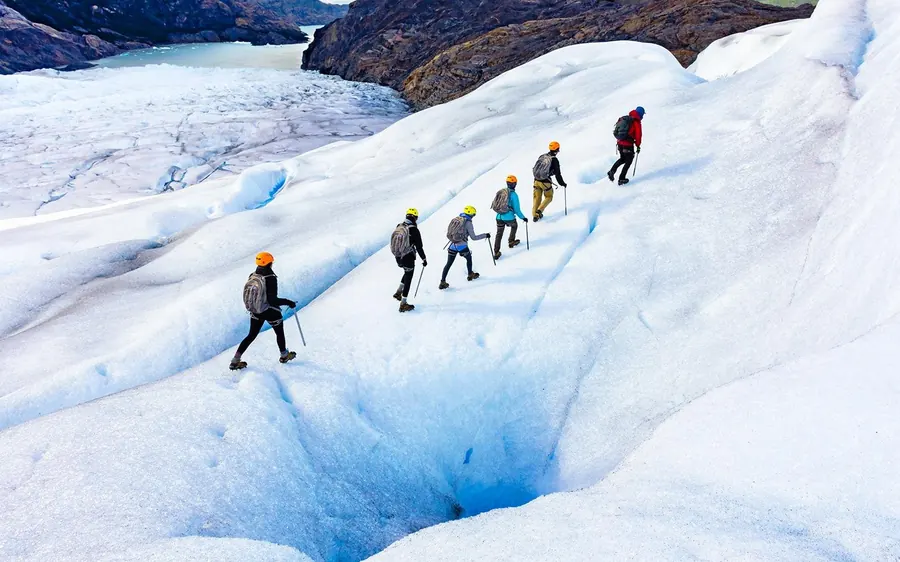
★ 4.6 · 21 reviews
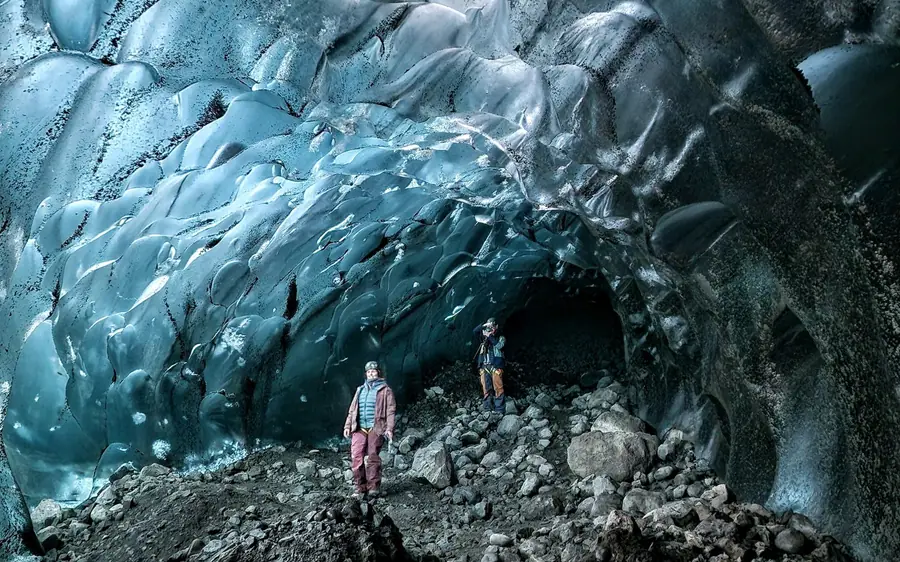
★ 4.7 · 65 reviews
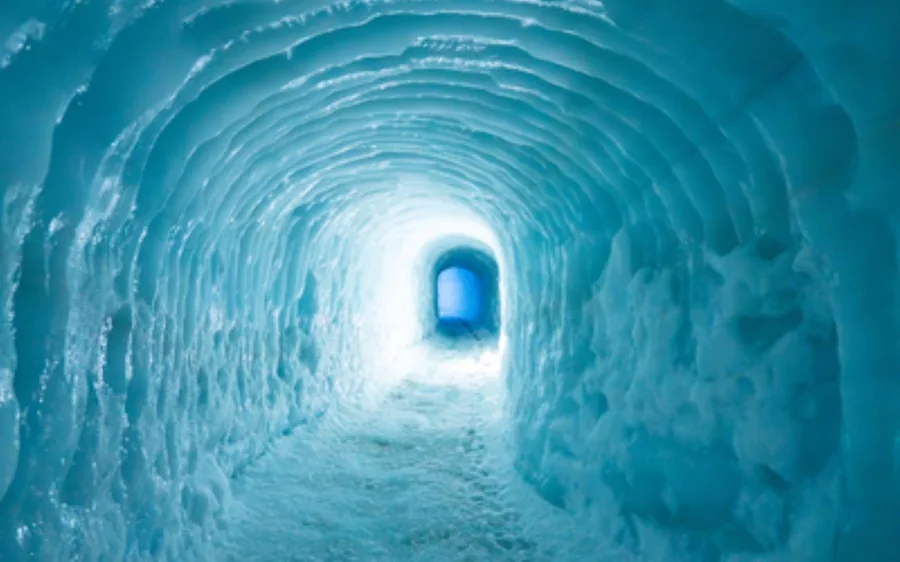
★ 4.7 · 857 reviews
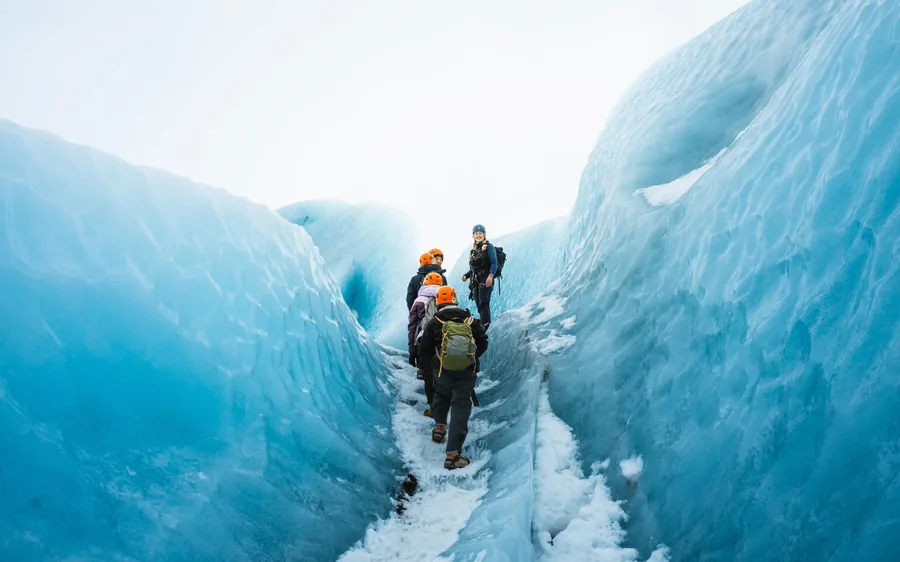
★ 4.4 · 275 reviews
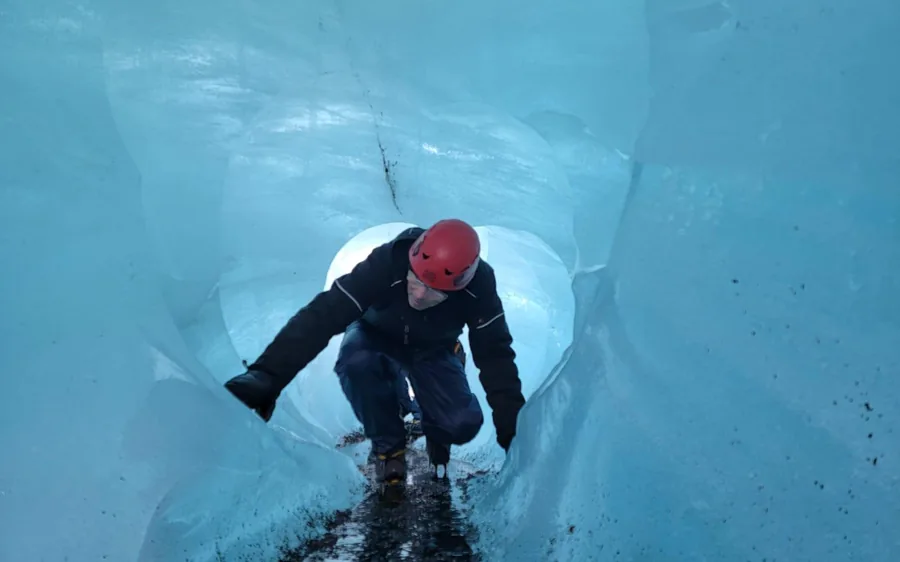
★ 3.4 · 6 reviews
★ 5.0 · 1 reviews
★ 4.7 · 225 reviews
★ 4.6 · 202 reviews
★ 4.6 · 154 reviews
★ 4.8 · 208 reviews
Two questions
Sixteen tours across four meeting points, and they come down to four decisions: whether you need to be inside the ice or on top of it, whether your dates fall inside the natural-cave season, how far you are willing to drive, and whether you have a car at all. Pick what matters and the page picks the tour.
See it before you pay for it
Three things, and the tour you pick decides how much of each. Ice the colour of deep water because centuries of pressure squeezed the air out of it, a floor of black volcanic sand that came off the mountains above, and a roof that was somewhere else entirely last winter.
Side by side
Everything here is one of three things, and the difference matters far more than the price. A natural cave exists only in winter and is different every year. A blue ice hike walks on top of the glacier instead of inside it. A cut tunnel is open all year and never changes.
Swipe the table sideways →
| MOST BOOKED CAVEJökulsárlón: The Original Ice Cave Tour on Vatnajökull | Skaftafell: Blue Ice Glacier Hike on Vatnajökull | From Húsafell: Into the Glacier Ice Cave Adventure | |
|---|---|---|---|
| Price per person | $159 | $100 | $176 |
| How long | 3 hours | 4 hours | 4 hours |
| Cost per hour | $53.00 | $25.00 | $44.00 |
| Are you inside the ice? | Yes — under the glacier | No — on top of it | Yes — in a cut tunnel |
| When it runs | About November to March | All year, weather allowing | Every day of the year |
| Same every year? | No — new caves each winter | Route changes with the ice | Yes — cut and maintained |
| Where it starts | Jökulsárlón car park | Skaftafell visitor centre | Húsafell, west Iceland |
| Gear included | Crampons, helmet, harness | Crampons, helmet, axe | Helmet; no crampons needed |
| Rating | 4.6 · 1,131 | 4.7 · 1,501 | 4.7 · 857 |
| Best for | The cave people picture | A first glacier, cheapest here | Summer dates, and certainty |
| Book this one→ | Check dates | Check dates |
Free cancellation · Reserve now, pay later
Verdict
If your dates are between November and March, the crystal cave runs out of the Jökulsárlón car park are the ones people mean when they say blue ice cave: three hours, the oldest and bluest ice on the page, and the largest review counts in the niche. If your dates are not, the cut tunnel at Langjökull is the only thing here you can walk into, and it is open every day of the year.
Check dates and availability→Before you book
One tour here carries 1,501 ratings and another 1,131; four of the sixteen are new listings with no review count at all. That does not make the new ones bad — two of them are small-group tours precisely because they are new. But a score built on fifteen hundred people and a listing with none are different kinds of fact, and it is worth knowing which one you are reading.
Two-minute check
Sixteen tours, four meeting points and one thing that decides more than the price: whether your dates fall inside the season when the natural caves are open at all. Three answers narrow it to one.
Which months are you here?This decides more than the price does
Where are you sleeping the night before?The lagoon is five hours from Reykjavík
What do you want out of it?Inside the ice, or on top of it
You'll get the tour that fits your answers, the thing about it that catches people out, and an honest word about whether your dates fall inside the season at all.
Six kinds of day
Ratings are the operators’ own numbers on GetYourGuide, shown as published. We do not write reviews and we do not average other people’s into a score of our own. One tour here carries more than fifteen hundred ratings, which is more evidence than anything else in this niche.
★★★★★
Based on 7,062
verified reviews
All sixteen tours on this page, rated by the people who took them on GetYourGuide.
Read all 7,062→Skaftafell: Blue Ice Glacier Hike on Vatnajökull
From $100 · 1,501 reviews
★★★★★
Four hours on the blue ice of Vatnajökull out of Skaftafell, with crampons, harness and axe handed out at the meeting point. 1,501 reviews at 4.7, which is more evidence than every other tour on this page put together — and it is also the cheapest thing here.
Jökulsárlón: The Original Ice Cave Tour on Vatnajökull
From $159 · 1,131 reviews
★★★★★
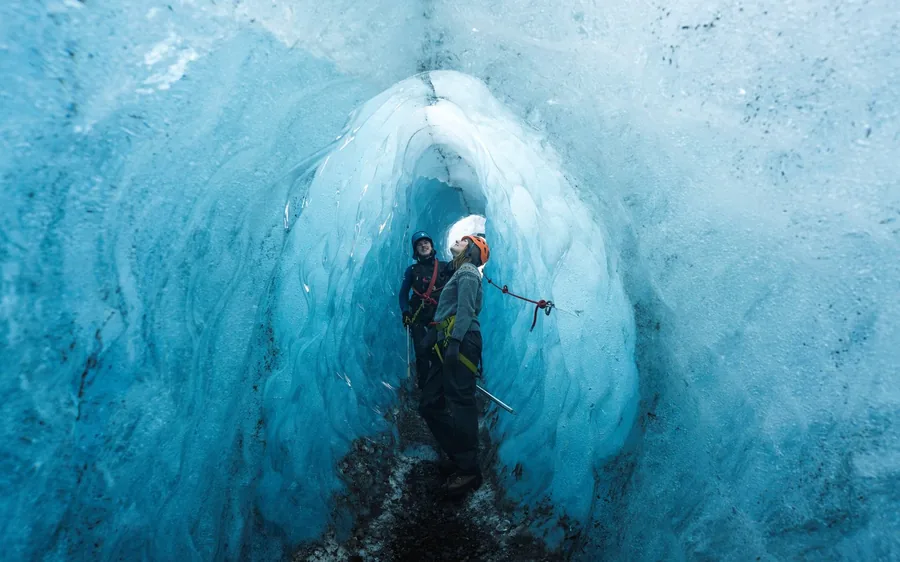
A super jeep from the Jökulsárlón car park across the outwash plain, then twenty minutes on foot to whichever cave is holding that week. This is the tour behind most of the photographs, and it has been running to these caves longer than anything else here.
From Húsafell: Into the Glacier Ice Cave Adventure
From $176 · open all year
★★★★★
Six hundred metres of tunnel cut into Langjökull with machines, thirty metres below the surface, with lit chambers and a small chapel inside. It is not a natural cave and it does not pretend to be. It is also the only ice you can walk into here in summer.
From Reykjavik: Into the Glacier Ice Cave Tour
From $305 · 11 hours
★★★★★
Eleven hours out of Reykjavík with the coach both ways, for anyone who is not driving in an Icelandic winter and has no intention of starting. The ice at the end of it is the same tunnel; what you are buying is not having to reach it yourself.
Reykjavík: Langjökull Glacier Snowmobile Tour with Ice Cave
From $340 · 154 reviews
★★★★★
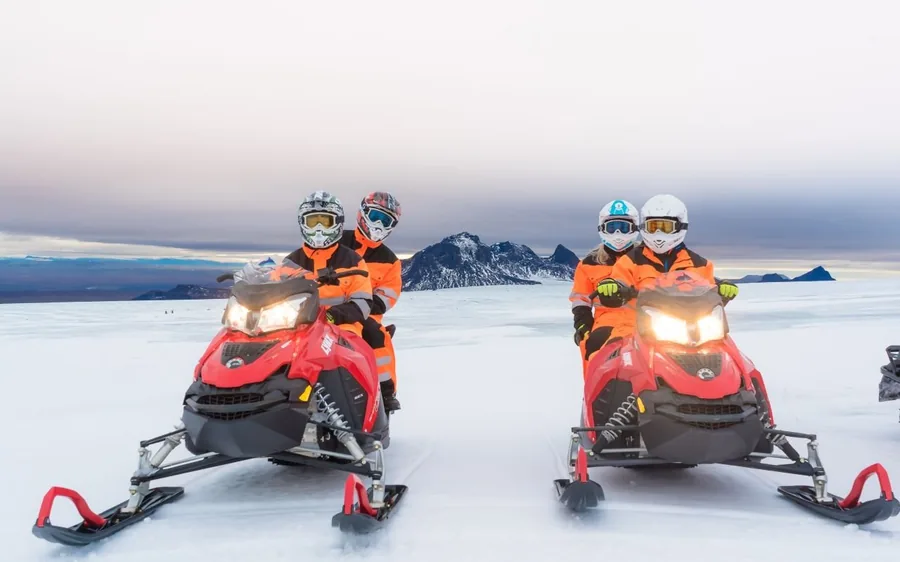
An hour on a snowmobile across the top of Langjökull, and the ice cave underneath at the end of it. Most people book those two separately and spend two days doing it; this is both on one ticket out of Reykjavík.
From Reykjavik: 3-Day South Coast Winter Tour with Ice Cave
From $906 · 208 reviews
★★★★★
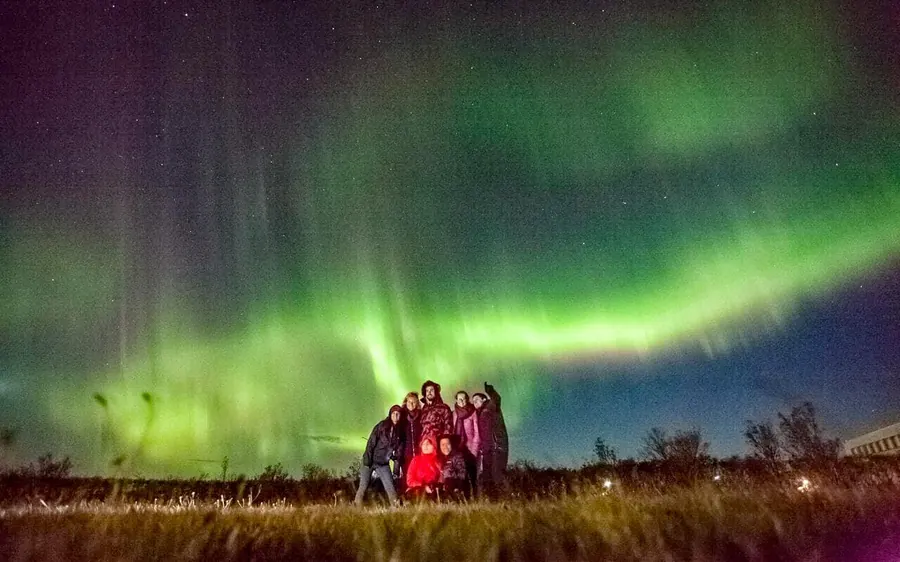
Three days down the south coast with the ice cave, the glacier lagoon and the aurora built in, with beds and meals included. It costs more than five of the day tours here put together, and people who only have one winter week in Iceland book it anyway.
What it really costs
A tour that takes you inside a natural cave starts at $149, and the Jökulsárlón departures most people book sit between $149 and $184. Walking on the blue ice without going inside starts at $100.
Swipe sideways →
| What you are paying for | Price | What you get | Cancellation |
|---|---|---|---|
| Blue ice on top of the glacier | $100–$133 | Three to four hours from Skaftafell, crampons on, no cave | Free cancellation |
| Inside a natural ice cave | $149–$259 | Two and a half to five and a half hours, jeep transfer included | Free cancellation |
| From Reykjavík, or more than one day | $305–$906 | Ten hours to three days, all transport included | Free cancellation |
The honest answer
Yes, and for a reason no listing prints: this is the only place in Europe where you can walk into a glacier, and the caves are gone by April. Book the month, not the price.
The tour, hour by hour
Every cave tour leaving the lagoon meets in the same car park, on the eastern side by the cafe. Bring the voucher on your phone. There is no shelter beyond the cafe, so arrive dressed.
Handed out at the vehicle and fitted over whatever boots you brought. This is the moment the guide checks your footwear, and the moment some people are turned away.
Off the Ring Road almost immediately, onto the outwash plain. Forty minutes of black sand and braided river channels that no hire car is allowed on.
Fifteen to twenty-five minutes on foot over loose rock and ice. Not steep, but uneven, and this is the part people underestimate.
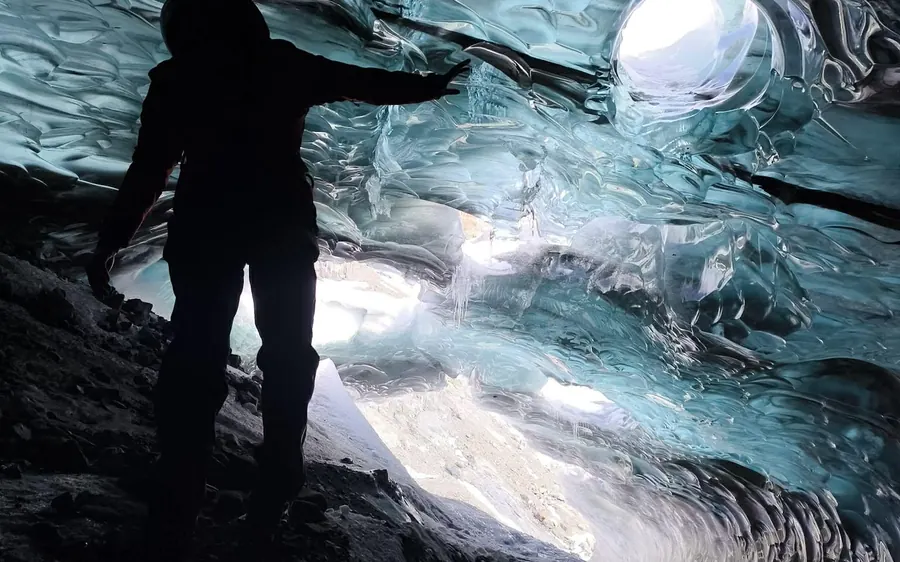
It is usually smaller than the photographs suggest, and often you go in stooped. Then the passage opens and the light changes colour.
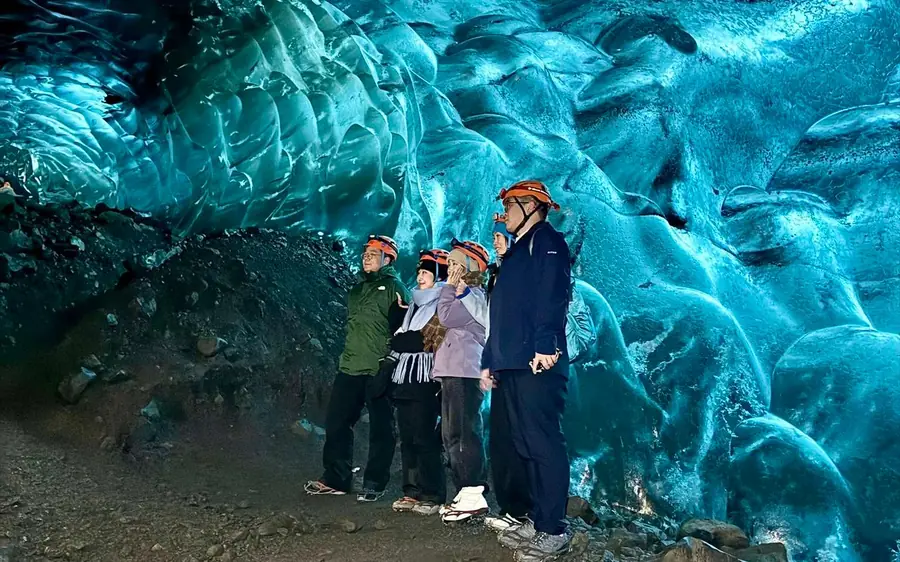
Twenty to forty minutes inside, depending on the cave. The guide goes first and decides how far in the group goes that day. The floor is ice under black sand; the ceiling makes noises.
The same ground in reverse, usually quicker because everyone has worked out how the crampons behave.
Three hours after you left, in the same car park. Diamond Beach is a two-minute drive and most people go straight there.
The one decision that matters
Everything else on this page is a preference. This is the thing that decides whether you get inside a glacier at all. The natural caves are holes cut by meltwater running through the ice in summer; they are only safe to enter once that water has stopped and the ceilings have frozen hard, which happens some time in November, and they are closed again when the melt restarts, which happens some time in March. Nobody can shift those dates, and no price changes them. If your trip falls between April and October, there is exactly one thing on this page you can still walk into: the tunnel bored into Langjökull with machines, which is open every day of the year and is honest about being made rather than found. Book the month first. Then pick the tour.
Four kinds of ice
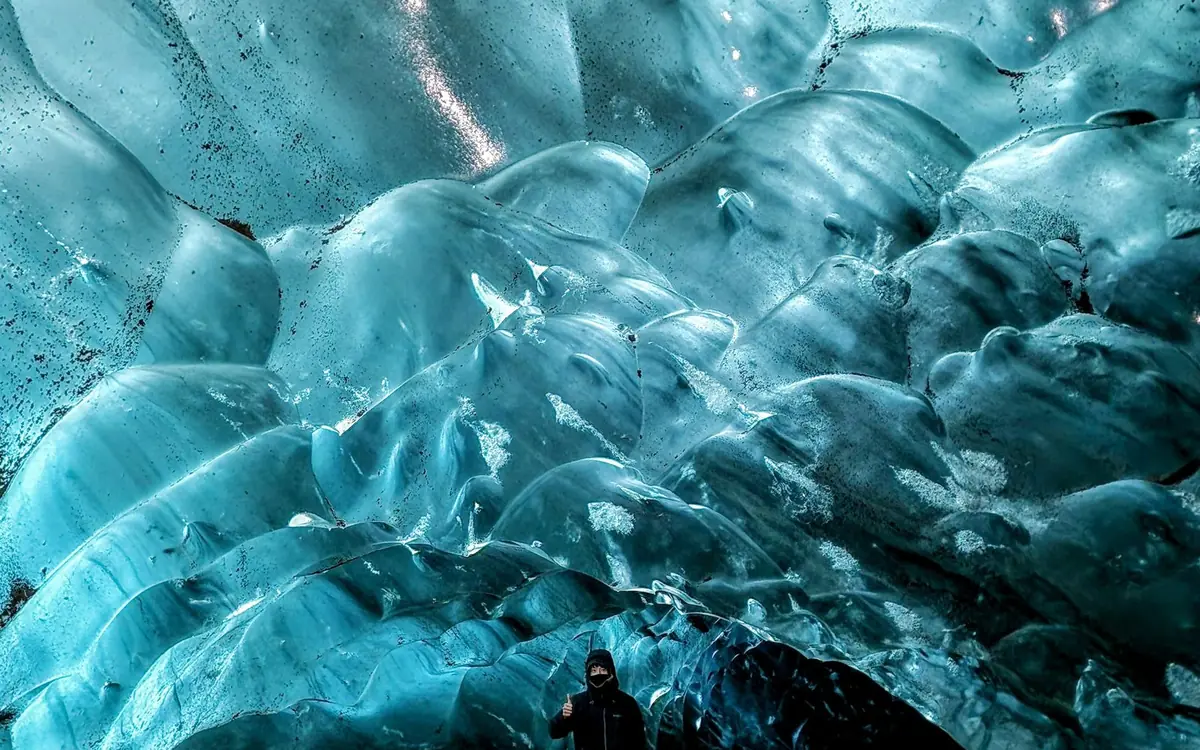
Not a filter. Pressure has squeezed the air out, and what is left absorbs every colour but this one.
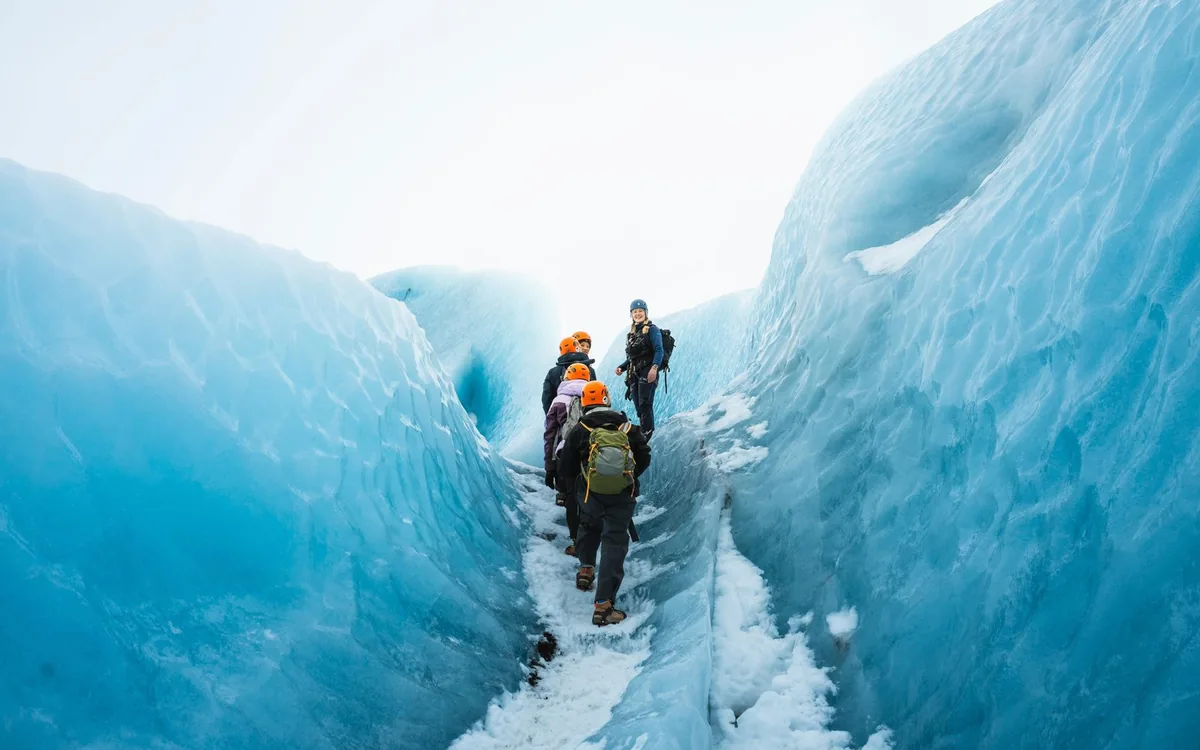
Open when the caves are shut, because a crack in the ice needs no ceiling to be safe.
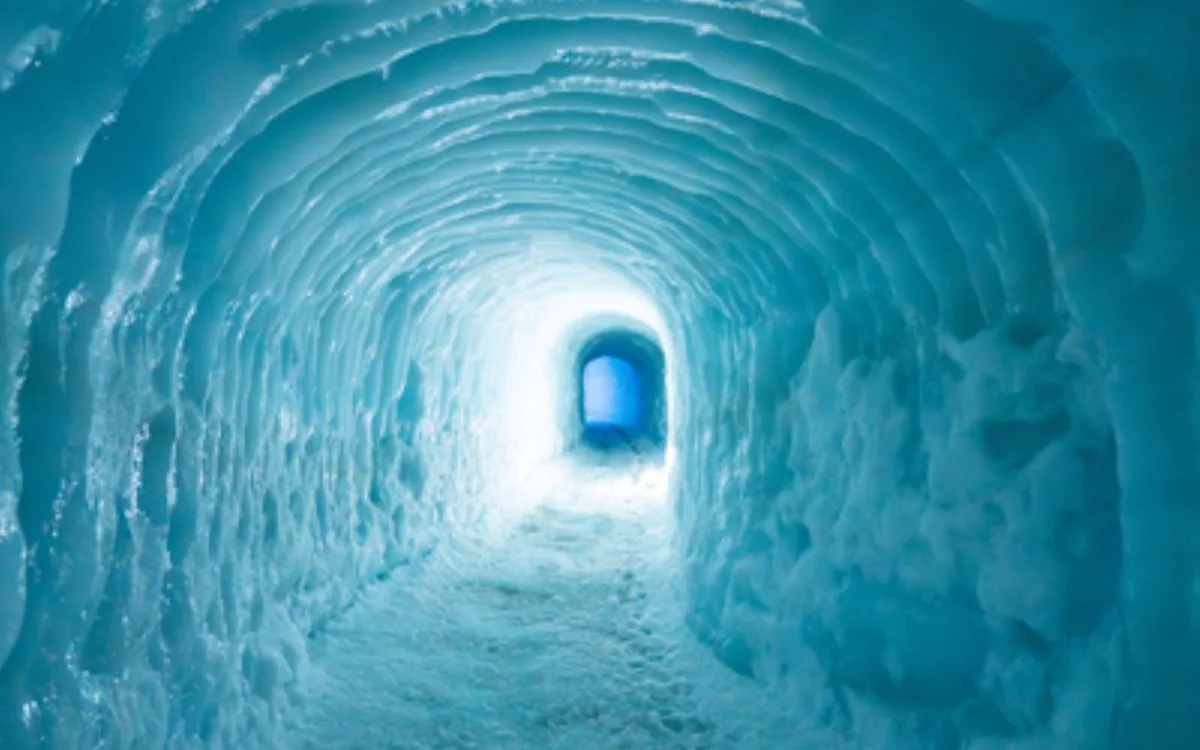
Six hundred metres bored into Langjokull by machine, and open every day of the year.
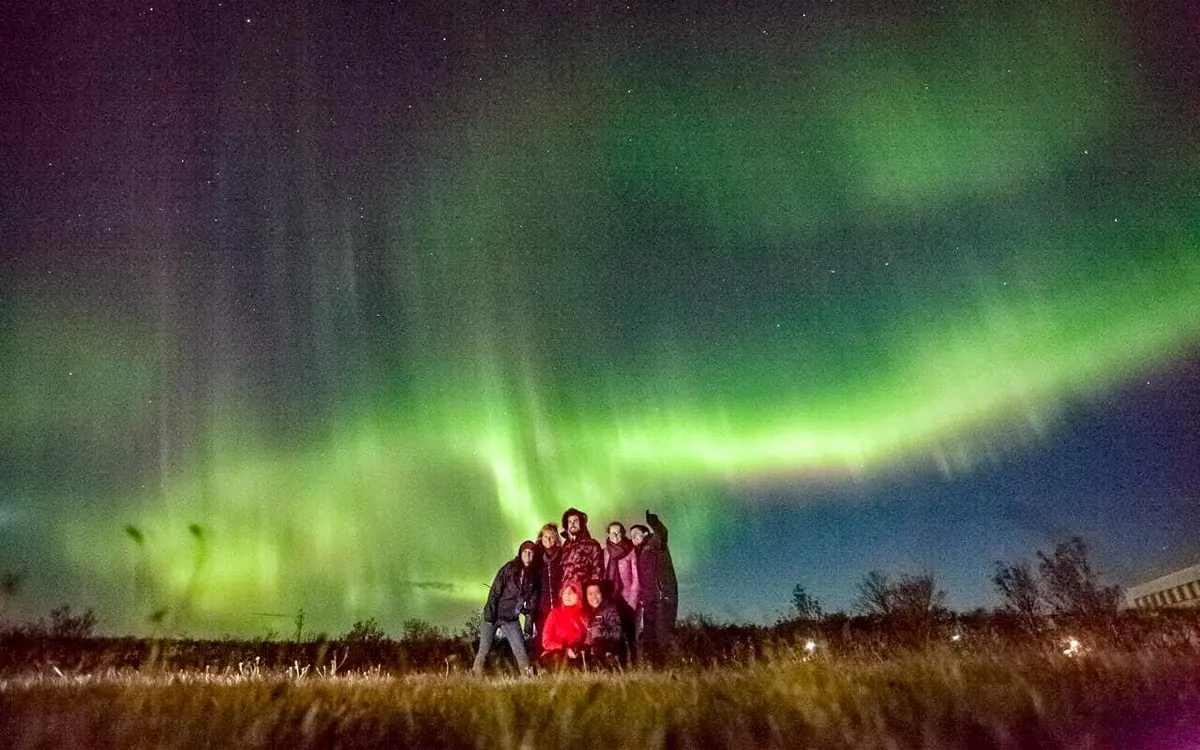
Ice cave season and aurora season are the same months, which is why they sell together.
Start here
Here is the thing the listings never say plainly, and everything else follows from it: the natural ice caves are seasonal, and the season is short. Guides start entering them when the glacier has frozen hard enough for the ceilings to hold, which is usually some time in November, and they stop when meltwater starts working on those ceilings again, which is usually some time in March. If your dates are in July, no amount of money opens a natural cave. Read the month before you read the price.
A blue ice cave is not a cave in rock with ice in it. It is a hole inside the glacier itself, cut by meltwater running through and under the ice in summer and then abandoned when the water stops in winter. That is why the caves are new every year: the water takes a different line each spring, and the passage you walked through last February may have collapsed or refrozen by the following one. Nobody is showing you a permanent attraction. They are showing you this year’s.
The colour is real, and it has a physical explanation worth knowing. Snow that falls on a glacier is mostly air. As more snow piles on top, the layers below are compressed until almost all of that air is squeezed out, and what is left is ice dense enough to absorb the long wavelengths — red, orange, yellow — and scatter only the short ones back. Deeper, older, denser ice goes deeper blue. The caves that photograph best are the ones cut into the oldest ice.
There is also black in most of these caves, and people are often surprised by it. Iceland is volcanic, and ash from eruptions lands on the glaciers and is buried by the next winter’s snow. Where a cave cuts through those layers you get black bands through the blue, and where the meltwater has washed the ash down, a floor of black sand. The photographs that show pure blue from wall to wall have usually been taken with a light aimed at one particular corner.
The tours sort into three shapes, and mixing them up is the most common mistake here. Going inside a natural cave means a jeep across the outwash plain from Jökulsárlón and a walk over moraine, roughly November to March. Walking on the blue ice at Skaftafell means crampons on top of the glacier with no roof over you, and it runs most of the year. The cut tunnel at Langjökull is six hundred metres bored into the ice with machines, open every single day, and honest about what it is.
A word about where these places are, because it catches people out. Jökulsárlón is about 380 kilometres from Reykjavík, which is four and a half to five hours in summer and longer in winter when the Ring Road is doing what the Ring Road does in January. Skaftafell is an hour closer. Neither is a day trip from the capital in any comfortable sense, which is exactly why the eleven-hour coach tours and the three-day trips on this page exist and why they cost what they cost.
And a word about safety, since it decides more here than anywhere else. Guides close caves without warning and without refunding the day, because a ceiling that has started moving gives very little notice. Nobody on this page will take you into a cave without a helmet and nobody will let you go in alone. Going in unguided is not a cheaper version of this — it is a different activity with a different outcome, and every operator here will tell you the same thing.
If you are not driving the south coast
These are the most expensive things on this page, and what you are paying for is not better ice — it is not having to get yourself 380 kilometres down the Ring Road in January. All three include the transport, and one of them includes the beds.
11 h · ★ 4.6 (202)
$305See dates 10 h · ★ 4.6 (154)
$340See dates 3 days · ★ 4.8 (208)
$906See datesPractical
Five things decide how it goes: the month, where you sleep the night before, what is on your feet, how much light there is at that hour, and whether you left the Ring Road enough time in winter.
The one behind most of the photographs. Super jeep across the outwash plain, then a walk over moraine. November to March.
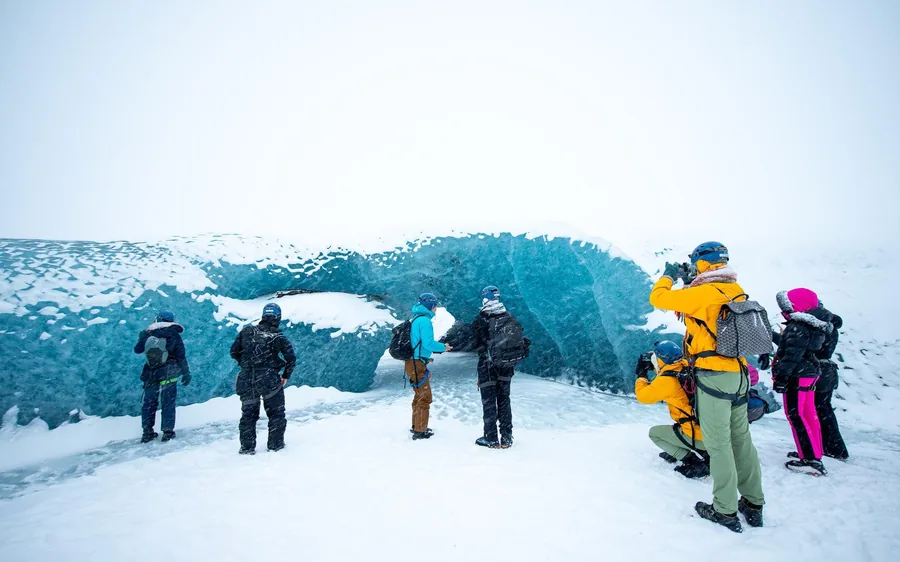
Crampons on top of Vatnajökull rather than under it, with the cheapest price on this page and the most reviews.
The glacier that calves into the lagoon, entered from the side the coaches do not use.
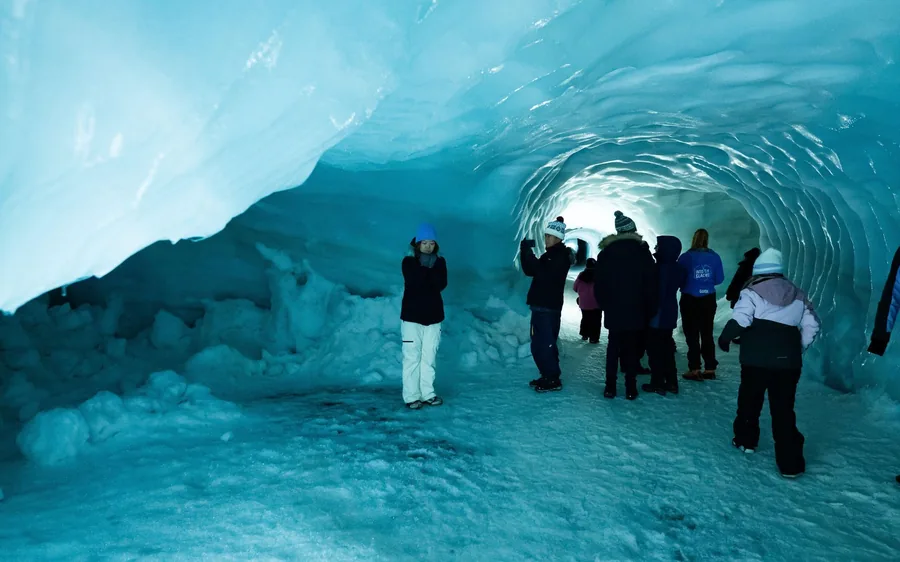
Six hundred metres cut by machine, thirty metres down, with lit chambers and a chapel. Open every day of the year.
Between the walls of a crack rather than under a ceiling. Open in shoulder weeks when the caves are not.
The five-and-a-half-hour tour goes to more than one if the ice allows it, which no three-hour tour can.
Dense, old, air-free ice absorbs everything except blue. The deeper the cave cuts, the stronger it gets.
Ash layers from past eruptions, buried by later snow and now cut through by the passage.
Washed down by the same meltwater that cut the cave. It is what stops the floor being a skating rink.
The shape of running water, stopped. This is the clearest evidence of how the cave was made.
Strings of them, lit from behind, holding air from centuries before anyone was measuring it.
Ice is not silent. It creaks, ticks and occasionally cracks, and the guides are listening to it the whole time.
Crampons are supplied; boots are not, on most tours. Trainers are the single most common reason people are turned away at the meeting point.
You will kneel, and the floor is wet black sand. This matters more than the thickness of your jacket.
You will put a hand on the ice repeatedly. Wool alone comes back soaked and stays that way.
Guides carry lights. Your own leaves both hands free and gets far better photographs.
Most caves are tight, groups are moving, and there is nowhere to set one up without being in the way.
road.is publishes closures in real time. In winter the road to the lagoon closes with little notice.
Every tour on this page cancels free, which makes an early booking a low-risk plan.
This is the busiest window of the season, and the small-group tours sell out first.
Höfn, Hof or Kirkjubæjarklaustur turn a five-hour drive into a thirty-minute one.
If the tour is called off you are refunded, but you cannot argue your way into a cave that has been closed.
It is the honest answer, it is open, and it is the only one.
“Jökulsárlón” means a specific car park by a specific cafe, not the nearest village.
Best time
Natural caves run from about November to March and nothing enters them outside that window. Inside those five months there are three different calendars — ice, daylight and crowds — and they do not peak in the same weeks.
Jan – Feb
The coldest weeks, which is exactly what you want: the glacier is fully frozen, the caves are at their most stable and the blue is at its strongest. Daylight is short but the light itself is long and low all day. Every tour on this page runs.
Nov – Dec
Guides start entering the caves as soon as the melt has stopped and the ceilings have frozen hard. Which caves open, and when, changes every year. Northern lights season overlaps, and the roads are usually still easy.
Mar
Long days, softer weather, and the last few weeks of the season. Some caves are already closed by mid-month because meltwater has started working on the roof again. Prices are at their lowest of the winter.
Apr – Oct
The natural caves are shut. Two things still run: the cut tunnel at Langjökull, which is open every day of the year, and the Katla cave in the south, which sits in a different kind of ice. Everything else on this page waits for the cold.
Worth knowing
The natural caves are shut from about April to October. This is the single most common disappointment in this niche, and no operator can get around it. If your dates are in summer, the cut tunnel at Langjökull is the one thing on this page that is open, and it is a good thing, just not the same thing.
Waterproof boots above the ankle, or you are not going in. Crampons are supplied on every tour here. Boots are not, on most of them, and guides do turn people away at the meeting point. Check the listing and check your feet.
You are inside the ice for twenty to forty minutes. A three-hour tour is forty minutes of driving each way, twenty minutes of walking each way, and the cave in the middle. That is the shape of it and it is worth knowing before you book.
The cave you see is not the cave in the photograph. Meltwater cuts new passages every spring, so the famous image you saved was taken in a cave that may no longer exist. Every guide here will say the same thing: they go to whatever is holding this week.
Sleep on the south coast the night before. Jökulsárlón is nearly five hours from Reykjavík. Höfn, Hof or Kirkjubæjarklaustur turn a brutal day into an easy morning, and they are the reason the three-day tour exists.
In December you have about five hours of useful light. Tours are timed around it, which is why the departures cluster in the middle of the day and why booking a late one in midwinter is not the bargain it looks like.
Round out the trip
Go deeper
Common questions
From $149 for a tour that walks across the glacier and into a cave under it, and most of the Jökulsárlón departures sit between $149 and $184. Walking on the blue ice without going inside starts at $100. Leaving from Reykjavík with the transport included runs from $305.
For most people, the crystal cave tours leaving the Jökulsárlón car park: they go to the caves in the oldest, bluest ice, they are three hours rather than a whole day, and they carry the most reviews in the niche. If your dates fall outside the winter season, the cut tunnel at Langjökull is the only real answer, and it is a good one.
No, and no operator here will suggest otherwise. The caves sit inside a moving glacier, they are reached across an outwash plain where hire cars are not permitted, and the ceilings are assessed by guides every single day. Every tour on this page supplies a helmet, and every one of them is led.
The natural caves run roughly from November to March. Guides go in once the glacier has frozen hard enough for the ceilings to hold, and they stop when meltwater starts working on them again in spring. Two exceptions run all year: the tunnel cut into Langjökull, and the Katla cave in the south, which sits in a different kind of ice.
Yes, with one thing understood in advance: you are inside the ice for twenty to forty minutes, and the rest of a three-hour tour is the jeep and the walk in. People who book expecting a half-day underground are the ones who write the disappointed reviews. People who book knowing the shape of it almost never do.
Because the air has been squeezed out of it. Fresh snow is mostly air and looks white; under the weight of centuries of more snow, the layers below compress until almost nothing is left but ice. Dense, air-free ice absorbs the red and yellow wavelengths and scatters back only the blue. Older and deeper means stronger colour.
No. Meltwater cuts the passages in summer and abandons them when it freezes, and it takes a different line every year. The cave in the photograph that made you look this up may not exist any more. Guides go to whichever cave is holding that week, which is why the listings rarely name one.
Jökulsárlón is about 380 kilometres, which is four and a half to five hours in good conditions and longer in winter. Skaftafell is an hour closer. That distance is the reason the eleven-hour coach tours and the three-day trips on this page exist, and why most people sleep on the south coast the night before.
Free · no account needed
One PDF: all sixteen tours by meeting point, hours and price, which of them go inside the ice and which walk on top of it, and what is open in each month of the year.
The plan is on its way. If it isn't there in a minute, look in Promotions.
Why trust this page
Durations, prices and ratings are read off the live listings rather than copied from other affiliate pages. The glaciers, the season and the way the caves form come from the published record.
The natural caves close from about April to October. That is the commonest disappointment in this niche, and it is at the top of this page rather than buried in a date picker.
Some of these walk on top of the glacier and some go under it. Both are good days and they are not the same product, so every card and every row says which one it is.
Sixteen tours, ranked on what they reach and how much evidence stands behind the rating. We earn a commission when you book and it does not change what we recommend.
The answer
If you are doing this once, book the four-hour blue ice tour on Vatnajökull for $100. It carries 1,501 reviews at 4.7, which is more than anything else here, the crampons and axe are included, and it is also the cheapest thing on this page. If what you want is to stand inside the ice rather than on it, take the crystal cave run out of Jökulsárlón at $159 instead — and check that your dates fall between November and March before you book it.
Check dates and availability→ Free cancellation · Reserve now, pay laterBefore you go
All sixteen tours by meeting point, hours and price, which go inside the ice and which walk on top of it, and what is open in each month of the year.
Check your inbox in a minute.
or
Just show me live dates and prices →
Skaftafell: Blue Ice Glacier Hike on Vatnajökull
★ 4.7 · 1 501 reviews · Free cancellation 24 h